|
ˆ
|
|
|
 •
October
5, 2011
-
Steve
Jobs' Death
Affects People
Around The
World. •
October
5, 2011
-
Steve
Jobs' Death
Affects People
Around The
World.
•
iPad
Steve Job
Keynote - Jan
27,
2010
•
iPhone
-4 Antenna
Problems in
June - 2010? .
. . Resolved in
July!
2005
March Bonus for
Steve
Jobs
•2006
-
January.
Disney buys
Pixar
•
2010 - The iPad
NEWS Made
History:
 All
of the built-in
apps on iPad
were designed
from the ground
up to take
advantage of
the large
Multi-Touch
screen. And
they work in
any
orientation. So
you can do
things with
these apps that
you can't do on
any other
device.
•
•"Since
Apple's
conception,"
says Josie
Cory,
publisher/editor
of Television
International
Magazine,
"we're still in
business
because of
Steve Jobs'
efforts in
developing the
Apple Computer
into a desk-top
media giant.
Working hand in
hand with
Internet media
distributors
like Google and
Yahoo, Jobs has
given "a new
on-line life
and style" to
the telephone,
print, radio,
television and
the film
industries with
the new VoIP
system. All
of the built-in
apps on iPad
were designed
from the ground
up to take
advantage of
the large
Multi-Touch
screen. And
they work in
any
orientation. So
you can do
things with
these apps that
you can't do on
any other
device.
•
•"Since
Apple's
conception,"
says Josie
Cory,
publisher/editor
of Television
International
Magazine,
"we're still in
business
because of
Steve Jobs'
efforts in
developing the
Apple Computer
into a desk-top
media giant.
Working hand in
hand with
Internet media
distributors
like Google and
Yahoo, Jobs has
given "a new
on-line life
and style" to
the telephone,
print, radio,
television and
the film
industries with
the new VoIP
system.
•
•
The
Disney, Pixar
$7.4 Billion
Dollar deal is
just one
example. WiFi
communications,
is a boon for
TV broadcasting
- Watch
Disney's ABC
grow along with
xingtv.com,
LookRadio,
tviNews, iTunes
and
iPodcasting.
•
•
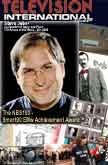
Cover
Photos:
Top
right photo
pictures
Disney's Bob
Iger shaking
hands with
Jobs, and
Stephen Wozniak
with Jobs in
1975. Josie
Cory is shown
leaving the
Disney studio
lot in Burbank,
after the
announcement of
the
Pixar/Disney
deal. Both,
ABC's legendary
Sam Donaldson,
and the
magazine he
co-founded with
Al Preiss, as
DonPre
Publishing in
1956, have been
reporting the
news for over
fifty years.
Steve Jobs has
been the NBS100
*EMw
Achievement
Award recipient
- three
times.
(*Electro-magnetic
wave).
|
|
• • • • •
|
|
 •
NEWS
•
This
Week •
NEWS
•
This
Week
•
01.
Steve
Jobs Leave
Post
•
02.
TimeLine
•
03.
The
Founder
•
04.
Related
News
•
05.
Amazon
GoogleKudoAd
06h
•
Acknowledgments
®™©
•
MORE
ByLines &
Steve Jobs
Achievements
|
•
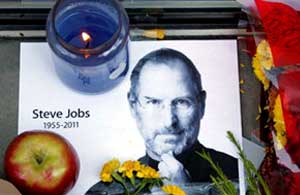
October
5, 2011
-
Steve
Jobs' Death -- Effects
People Around The
World
.
•
October 6, 2011 -
Newspapers around the
globe pay homage to U.S.
legend Steve Jobs. To
many of us who followed
the "Mac path" it seems
like loosing a friend.
He touched so many lives
with his innovation and
vision that we can't
help but ask ourselves,
"Will the tech world
ever be the same without
Jobs?
 •••
Much
is going to be written
about this extraordinary
man, so here are just a
few highlights in his
own words. •••
Much
is going to be written
about this extraordinary
man, so here are just a
few highlights in his
own words.
•
APPLE'S
EARLY
YEARS
(the
mid-1970s)
•••
"Because Woz
[Apple co-founder
Steve Wozniak] and I
started the company
based on doing the whole
banana, we weren't so
good at partnering with
people...I think if
Apple could have had a
little more of that in
its DNA, it would have
served it extremely
well...I don't think
Apple learned that
until...a few decades
later."-- From an
appearance at the D5
conference in
2005.
•
MOVING ON TO THE
MAC
(1981)
"Who
cares about the Apple
II?...The Macintosh is
the future of Apple, and
you're going to start on
it now."-- Said to Andy
Hertzfeld, then a young
engineer, in February
1981 when he was being
moved from the Apple II
group to the Mac unit.
As recounted by
Hertzfeld in "Revolution
in the Valley: The
Insanely Great Story of
How the Mac Was
Made.
•
"INTRODUCING THE
MACINTOSH (1984)
•••
You've just seen
some pictures of
Macintosh. Now I'd like
to show you Macintosh in
person."
-- From the unveiling of
the Macintosh, January
1984.
"It is with considerable
pride that I introduce a
man who's been like a
father to me...STEVE
JOBS."-- The Macintosh,
at its
unveiling.
•
VISION OF COMPUTING
(1985)
•••
"A computer is
the most incredible tool
we've ever seen. It can
be a writing tool, a
communications center, a
supercalculator, a
planner, a filer and an
artistic instrument all
in one, just by being
given new instructions,
or software, to work
from. There are no other
tools that have the
power and versatility of
a computer. We have no
idea how far it's going
to go. Right now,
computers make our lives
easier. They do work for
us in fractions of a
second that would take
us hours. They increase
the quality of life,
some of that by simply
automating drudgery and
some of that by
broadening our
possibilities. As things
progress, they'll be
doing more and more for
us....
"The most compelling
reason for most people
to buy a computer for
the home will be to link
it into a nationwide
communications network.
We're just in the
beginning stages of what
will be a truly
remarkable breakthrough
for most people--as
remarkable as the
telephone."
•
TASTE AND TECHNOLOGY
(ca. 1996)
"Ultimately
it comes down to taste.
It comes down to trying
to expose yourself to
the best things that
humans have done and
then try to bring those
things in to what you're
doing. I mean Picasso
had a saying, he said
good artists copy, great
artists steal. And we
have always been
shameless about stealing
great ideas, and I think
part of what made the
Macintosh great was that
the people working on it
were musicians and poets
and artists and
zoologists and
historians who also
happened to be the best
computer scientists in
the world...
"The only problem with
Microsoft is they just
have no taste...I don't
mean that in a small
way, I mean that in a
big way, in the sense
that they don't think of
original ideas, and they
don't bring much culture
into their product...So
I guess I am saddened,
not by Microsoft's
success--I have no
problem with their
success; they've earned
their success for the
most part. I have a
problem with the fact
that they just make
really third-rate
products."
-- From "Triumph of the
Nerds."
 •
INTRODUCING THE IMAC
(1998) •
INTRODUCING THE IMAC
(1998)
"iMac
comes from the marriage
of the excitement of the
Internet with the
simplicity of
Macintosh."
-- From the 1998
unveiling of the iMac
all-in-one device,
arguably the most
significant computer
Apple introduced during
the
1990s.
•
APPLE OPENS ITS FIRST
STORES (May
2001)
•
INTRODUCING THE IPOD
(October
2001)
•
"What is
iPod? Well, I happen to
have one right here in
my pocket. There it is,
right there."
-- From the unveiling of
the iPod in October
2001.
•
INTRODUCING THE
IPHONE (January
2007)
"Today
Apple is going to
reinvent the phone, and
we are calling it
iPhone."
-- From the unveiling of
the iPhone in January
2007. And it's more than
just a phone, Jobs said:
"iPhone is like having
your life in your
pocket."
•
INTRODUCING THE
IPAD
(January
2010)
Jobs introduces and puts
to rest rumors
surrounding the much
anticipated Apple
tablet. "Apps on iPad
look and feel like
nothing you have ever
experienced."
•
TAKING MEDICAL LEAVE
(January
2011)
"I love Apple
so much."
•
•
02.
CLICK FOR MORE STEVE
JOBS
TIMELINE
ByLines:
Editors Note
•
TVI Magazine - NBS
Achievement Award
•
Steve
Jobs
2005•••••••••••••••••2006••••••••••••••••••••2009
•• • •
•••••••••••••••2008••••••••••••••••••••2010••••••••••••••••••2010•••••••••••••••••2011•••••••••••••
 • • • • • •
|
|
MORE
/ RELATED
NEWS
•
2009
-
STEVE JOBS TO LEAVE
POST.
|
|
PHOTO
IMAGES
•
2009
-
STEVE JOBS TO LEAVE
POST.
News from
Apple Media - Letters
From Steve Jobs
|
•
1.
Feature Story /
|
|
|
|
|
Steve Jobs. CEO,
Apple, CEO,
Pixar
•
•
Steve Jobs is the
CEO of Apple, which he
co-founded in 1976, and
Pixar, the
Academy-Award-winning
animation studios which
he co-founded in
1986.
•
•
Apple ignited the
personal computer
revolution in the 1970s
with the Apple II and
reinvented the personal
computer in the 1980s
with the Macintosh.
Today, Apple continues
to lead the industry in
innovation with its
award-winning desktop
and notebook computers,
OS X operating system,
and iLife and
professional
applications. Apple is
also leading the digital
music revolution with
its iPod portable music
players and iTunes
online music
store.
•
•
Pixar has created
six of the most
successful and beloved
animated films of all
time: Academy
Award-winning Toy Story
(1995); A Bug's Life
(1998); Toy Story 2
(1999); Monsters, Inc.
(2001); Academy
Award-winning Finding
Nemo (2003); and The
Incredibles (2004).
Pixar's six films have
grossed more than $3
billion at the worldwide
box office to
date
•
•
Steve grew up in
the apricot orchards
which later became known
as Silicon Valley, and
still lives there with
his wife and three
children.
|
|
|
•
ABOUT
STEVE JOBS -
NBS100-74
•
Feature
Story
•
Center
Page Story
Timeline / Highlights /
Academia /
•
TVI
Bylines
|
|
•
|
Feature
Story - 2010
-
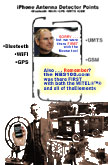
 •102-WiTELantennas-1902style •102-WiTELantennas-1902style
•••
iPhone
Antenna Problems?
There's A Way Out . . .
2010 "if you could
sqeeze your iPhone
inside a loop
antenna."
•••
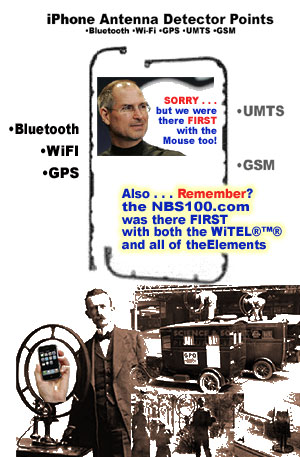
"If
you ever wondered why
your iPhone had patchy
service even though it
showed the signal bars
at full strength?" It's
the way your holding the
handi in the palm of
your hand.
•••
Apple has admitted that
its iPhones have been
inflating signal
strengths and masking
poor reception," but
says David MacFarlane of
NBS
WiTEL®™©,
" -- all Apple has to do
is surround the
telephony device and the
beholder, (the
individual) -- with
a proper WiTEL®™©
aerial system, and the
beholder becomes the
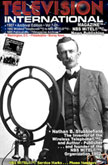
antenna." (see
Left photo of NBS -- the
Wireless
Telephone®™©
inventor, and his
WiTEL®™©
loop
antenna).
WiTEL®™©
aerial system, and the
beholder becomes the
antenna." (see
Left photo of NBS -- the
Wireless
Telephone®™©
inventor, and his
WiTEL®™©
loop
antenna).
•••
Apple revealed the
embarrassing flaw, which
it said has been a
problem since the
original iPhone was
launched three years
ago, as it was
addressing an uproar
over dropped signals on
its new iPhone 4, which
came out last week.
•••
• iPhone Needs
Code: 887-WiTEL-187.
• Your Arm &
Legs Act as the
antenna!
LAW
SUIT
 After
just a week of
availability, Apple's
iPhone 4 is the subject
of a class-action
lawsuit. After
just a week of
availability, Apple's
iPhone 4 is the subject
of a class-action
lawsuit.
•••
Citing the iPhone 4's
antenna problems, which
requires users to hold
the smart phone in a
particular way to avoid
connection problems, law
office Mason LLP has
filed the suit in the
U.S. District Court for
the Northern District of
California. It claims to
be speaking on behalf of
"hundreds of thousands"
of iPhone 4 owners.
•••
The focus of the lawsuit
is to highlight what the
plaintiffs say is a
defective antenna. They
are requesting that the
court require Apple to
offer a case at no
charge to iPhone 4
buyers. The suit also
asks for monetary
damages related to the
alleged "diminished
value of the phone."
///
 •106ObamaWiTELCommitment •106ObamaWiTELCommitment
•
The
Obama Wireless
Telephone®™©
Commitment
•••
Easily . . . the thrill
ride of the Summer will
be the Obama Commitment
Spectrum Increase. Under
the new June - 2010
Obama Wireless
Telephone®™©
Commitment, plans are
now in the works to make
over 500 megahertz of
spectrum available to
the highest bidder --
during the next 10
years.
•••
"Mobile phone companies,
like AT&T, Verizon,
and Sprint praise the
comment. However," says
NBS
WiTEL®™©
spokesman, Mark Anderson
says, "existing Radio-TV
broadcasters, may resist
giving up some of their
spectrums for
WiTEL®™©
broadband play assigned
telephone numbers."
•••
President Obama signed a
memorandum Monday that
was committed to double
the current amount of
airwaves available for
WiTEL®™©
devices over the next 10
years, a move intended
to create jobs and boost
investment in the mobile
phone market.
•
02.
"KINGSBURY
COMMITMENT" --
EMW
SPECTRUMS
•••
• Q -
Where Did The U.S. Get
The Radio Specrums In
The First Place? . . .
asked Radio-TV industry
executives.
•••
• A -
The availability of
the first wireless EMW
spectrums to the general
public was first made
possible by the
Kingsbury Commitment, in
1910. The Specrums were
seized by
U.S.A.
Regulatory Seizure.
• CLICK
FOR MORE Obama
WiTEL®™©
RF Commitment
STORY.
///
Part
02
/
TIMELINE
-
Life
- ACHIEVEMENTS
STEVE
PAUL JOBS
--
1955
-
Born.
Steve Paul Jobs was born
on February 24, Los
Altos CA; He was raised
by adoptive parents Paul
and Clara in Mountain
View and, later in Los
Altos, California. His
father was a machinist
at Spectra-Physics, and
his "early interest in
machines was inspired by
his father's work"
(Notable).
1968
- At age 13 Jobs
met, William Hewlett who
offered him a summer job
at the Hewlett-Packard
plant. It was there,
when Jobs was 13, that
he met the man with whom
he would invent "the
first ready-made
personal computer"--
1970
- going to work for
Atari after leaving Reed
College, Jobs renewed
his friendship with
Steve Wozniak. The two
designed computer games
for Atari and a
telephone "blue box",
getting much of their
impetus from the
Homebrew Computer Club.
Beginning work in the
Job's family garage they
managed to make their
first "killing" when the
Byte Shop in Mountain
View bought their first
fifty fully assembled
computers. On this basis
the Apple Corporation
was founded, the name
based on Job's favorite
fruit and the
logo.
1972
- Steve meets the 18
year old, college
drop-out Steve Wozniak
(Lemelson-MIT). At this
time though, Jobs helped
Wozniak sell his "'blue
box' an illegal
pocket-size telephone
attachment that would
allow the user to make
free long-distance
calls".
1974
-
Jobs graduated from
high school, and went to
Reed College. After the
first semester, he
dropped out of the
school, but stayed
around the campus,
"taking classes in
philosophy and immersing
himself in the
counterculture" .
1974
- Jobs started
working as a video game
designer for Atari,
Inc., "a pioneer in
electronic arcade
recreation" . After
working for several
months and saving his
money, he then went to
India with a friend in
search of spiritual
enlightenment.
• •
When
he returned, Jobs
started attending weekly
meetings of Wozniak's
Homebrew Computer Club.
While Wozniak was
"content with the joy of
electronics . . . .
[Jobs] had his
eye on marketability of
electronic products and
persuaded Wozniak to
work with him toward
building a personal
computer" . So with
Jobs' "passionate belief
in bringing computer
technology to everyone"
and Wozniak's
"engineering talent"
they became a team
(Lemelson-MIT).
• •
They
"designed the Apple I in
Jobs' bedroom and . . .
built the prototype in
the Jobs' garage" . To
finance their company,
Jobs sold his Volkswagen
van and Wozniak his
programmable calculator
to raise $1,300. Some
weeks later, Jobs
"secured the company's
first sale: 50 Apple I
computers at $666 each"
. And Apple Computers
Inc., was
born.
• •
The
Apple I lead to the
Apple II. The successful
Apple II has been
described as "the
Volkswagen of computers"
. Jobs "created the
sleek design for the
Apple II" with its
plastic casing and
featuring the Apple
logo, "an apple with a
missing bite, playing on
the word 'byte,' one of
the central units of
information in computer
languages"
(Notable).
There
were three main factors
in the Apple II's
success. One reason
being it had an open
system that allowed for
add-ons like modems.
1976
- They marketed it
in 1976 at a price of
$666. Jobs and Wozniak
put together their first
computer, called the
Apple I. The Apple I was
the first single-board
computer with built-in
video interface, and
on-board ROM, which told
the machine how to load
other programs from an
external source. Jobs
was marketing the Apple
I at hobbyists like
members of the Homebrew
Computer Club who could
now perform their own
operations on their
personal computers. Jobs
and Wozniak managed to
earn $774,000 from the
sales of the Apple I.
The following year, Jobs
and Wozniak developed
the general purpose
Apple II. The design of
the Apple II did not
depart from Apple I's
simplistic and
compactness design. The
Apple II was the
Volkswagon of computers.
The Apple II had
built-in circuitry
allowing it to interface
directly to a color
video monitor. Jobs
encouraged independent
programmers to invent
applications for Apple
II. The result was a
library of some 16,000
software programs.
• •
Quickly
setting the standard in
personal computers, the
Apple II had earnings of
$139,000,000 within
three years, a growth of
700 percent.
///
1978
- The second was
that after 1978 the
computer came with a
Wozniak engineered disk
drive.
1978
-
The
Wozniak
engineered
drive
was perfected after Jef
Raskin joined Apple in
January 1978 as the 31st
employee. He later hired
his former student Bill
Atkinson from UCSD to
work at Apple, and began
the Macintosh project.
He was credited with the
decision to use a
one-button mouse as part
of the Apple interface,
a departure from the
Xerox PARC standard of a
three-button mouse. He
has since stated that if
it were he who had
redesign the interface,
he would have used a two
button mouse.
1979
- Apple's devotees
developed the spread
sheet program that only
ran on Apple Computers.
One of those devotees
was
Jef
Raskin. He was the
human-computer interface
expert who began the
Macintosh project for
Apple Computer and was
the author of The Humane
Interface, which in
large part builds on his
earlier work with the
Canon Cat. Raskin
received a B.S.
Mathematics and B.A. in
Philosophy from the
State University of New
York and an M.S. in
Computer Science from
the Pennsylvania State
University. As an
assistant professor at
the University of
California, San Diego
(UCSD), he taught
classes ranging from
computer science to
photography.
1982
- Apple goes public.
Impressed with that
growth, and a trend
indicating an additional
worth of 35 to 40
percent, the cautious
underwriting firm of
Hambrecht & Quist in
cooperation with Wall
Street's prestigious
Morgan Stanley, Inc.,
took Apple public in
1980. The underwriters
price of $22 per share
went up to $29 the first
day of trading, bringing
the market value of
Apple to $1.2
billion.
1982
- Apple had sales of
$583,000,000 up 74
percent from 1981. Its
net earnings were $1.06
a share, up 55 percent,
and as of December 1982,
the company's stock was
selling for
approximately $30 a
share.
1983
- its compound
growth rate was over
150% a year. Then IBM
muscled into the
personal computer
business. Two years
after introducing its
PC, IBM passed Apple in
dollar sales of the
machines. IBM's
dominance had made its
operating system an
industry standard which
was not compatible with
Apple's products. Jobs
knew in order to compete
with IBM, he would have
to make the Apple
compatible with IBM
computers and needed to
introduce new computers
that could be marketed
in the business world
which IBM controlled. To
help him market these
new computers Jobs
recruited John Sculley
from Pepsi Cola for a
position as president at
Apple.
1983
- Jobs designed the
Macintosh to compete
with the PC and, in
turn, make Apple's new
products a success. In
an effort to revitalize
the company and prevent
it from falling victim
to corporate
bureaucracy, Jobs
launched a campaign to
bring back the values
and entrepreneurial
spirit that
characterized Apple in
its garage shop days. In
developing the
Macintosh, he tried to
re-create an atmosphere
in which the computer
industry's highly
individualistic,
talented, and often
eccentric software and
hardware designers could
flourish. The Macintosh
had 128K of memory,
twice that of the PC,
and the memory could be
expandable up to192K.
The Mac's 32-bit
microprocessor did more
things and out performed
the PC's 16-bit
microprocessor. The
larger concern of
management concerning
the Macintosh was not
IBM compatible. This
caused an uphill fight
for Apple in trying to
sell Macintosh to big
corporations that where
IBM territory. "We have
thought about this very
hard and it could be
easy for us to come out
with an IBM look-alike
product, and put the
Apple logo on it, and
sell a lot of Apples.
Our earning per share
would go up and our
stock holders would be
happy, but we think that
would be the wrong thing
to do," says Jobs. The
Macintosh held the
moments possibility that
computer technology
would evolve beyond the
mindless crunching of
numbers for legions of
corporate bean-counters.
As the print campaign
claimed, the Macintosh
was the computer "for
the rest of us."
1983
- Jobs lured John
Scully from Pepsi-Cola
to help him compete,
saying "If you come to
Apple you can change the
world" .
1984
- after the failed
Apple III and Lisa
computers (Apple III had
design flaws and Lisa,
though user friendly was
too expensive), Apple
introduced the
Macintosh. Jobs designed
it to compete with the
PC, and on Super Bowl
Sunday in 1984, the
Macintosh was unveiled
with the promise that
"1984 would not be like
1984" . The Macintosh,
the first truly
user-friendly computer,
with its mouse, icons,
and pop-up menus, was
hailed by Jobs as being
"not just great . . .
but insanely great"
(Levy, 27).
1984
-
Macintosh was
introduced in
1984.
The
Macintosh was a success,
"over 400,000 Macs were
sold in the first year
of production," but it
did not ease any of the
tension at Apple.
1984
- the strategy Jobs
used to introduce the
Macintosh in 1984 was
radical. The Macintosh,
with all its apparent
vulnerability, was a
revolutionary act
infused with altruism, a
technological
bomb-throwing. When the
machine was introduced
to the public on Super
Bowl Sunday it was, as
Apple Chairman Steve
Jobs described it, "kind
of like watching the
gladiator going into the
arena and saying, 'Here
it is." [Scott,
1991, p.71] The
commercial had a young
woman athlete being
chased by faceless
storm-troopers who raced
past hundreds of vacant
eyed workers and hurled
a sledgehammer into the
image of a menacing
voice. A transcendent
blast. Then a calm,
cultivated speaker
assured the astonished
multitudes that 1984
would not be like 1984.
Macintosh had entered
the arena. That week,
countless newspapers and
magazines ran stories
with titles like "What
were you doing when the
'1984' commercial ran?"
• •
Throughout
the development of the
Macintosh, Jobs had
fanned the fervor of the
design team by
characterizing them as
brilliant, committed
marhinals. He repeatedly
clothed both public and
private statements about
the machine in
revolutionary, sometimes
violent imagery, first
encouraging his
compatriots to see
themselves as outlaws,
and then target the
audience to imagine
themselves as
revolutionaries. Jobs,
like all those who
worked on the project,
saw the Macintosh as
something that would
change the world. Jobs
described his Macintosh
developing team as souls
who were "well grounded
in the philosophical
traditions of the last
100 years and the
sociological traditions
of the 60's. The
Macintosh team pursued
their project through
grueling hours and
against formidable odds.
A reporter who
interviewed the team
wrote: "The machine's
development was, in
turn, traumatic, joyful,
grueling, lunatic,
rewarding and ultimately
the major event in the
lives of almost everyone
involved".
•
CLICK
FOR MORE 1985 -
STEVEJOBS vs
Scully
•
CLICK
FOR MORE 2009 - STEVE
JOBS Letter TO
LEAVE
///
Return
ˆ
To
Top
|
|
|
|
Feature
Story -
•
1985
- NeXT,
Wozniak left and Scully demoted Jobs. Jobs then
left Apple
to form his own company. This company, NeXT has
a focus on educational computing. Though the final
product sold poorly, its "workstation concept with
high-level graphics and advanced technology
resulted in descovering animation. Subsequently he
started the NeXT Corporation to provide an
educational system at a reasonable price, but found
that software was a better seller than hardware.
1985
- during a board meeting, Jobs said "I've been
thinking a lot and it's time for me to get on with
my life." He resigned as chairman with the
intention to launch his own venture. His departure
from Apple allowed Jobs to revolutionize the
hardware industry with his new company
NextStep.
1986
- Pixar, co-founded by Jobs.
1989
- Jobs receiving the 1989 Software Publishers
Association's Lifetime Achievement Award" (Notable
).
1991
- Jobs married Laurene Powell and they now have
two children. Jobs is presently using his prestige
and influence which he earned at Apple to further
advance computer technology and provide an
alternative to Microsoft. Jobs feels "Microsoft has
not transformed itself into an agent for improving
things or a company that will lead the next
revolution in software development" . Jobs has also
become "concerned because he sees Microsoft
competing very fiercely to put a lot of companies
out of business . . .hurting innovation in the
computer industry" . Jobs would rather the public
use NeXT, instead of Microsoft.
1993
- After years of struggle and over $250 million
in investments in the firm, his dreams were not
coming to life and he decided to terminate the
hardware division He realized that his knowledge
and efforts were better utilized in the software
industry.
1994
- NextStep software would revolutionize the
industry with a fresh technology called OOP
(Object-Oriented Programming) that allowed
programmers to design software programs in a
smaller amount of time. Next Software was later
sold to Apple Computer in early
1997.
1995
- Pixar's first Academy Award-winning Animated
movie: Toy Story.
1998
- A Bug's Life (1998);
1999
- Toy Story 2 (1999);
2001
- Monsters, Inc. (2001);
2003
- Academy Award-winning Finding Nemo (2003);
and
2004
- The Incredibles (2004).
2005
- Today, Apple continues to lead the industry
in innovation with its award-winning desktop and
notebook computers, OS X operating system, and
iLife and professional applications. Apple is also
leading the digital music revolution with its iPod
portable music players and iTunes online music
store.
2005
- March 16 - Apple Seeks Bonus for Steve
Jobs
2005
March 110BonusforSteveJobsApple Seeks to Boost
Bonuses
•
• March 16, 2005BonusforSteveJobsApple Seeks
to Boost Bonuses
• • Apple Computer Inc., whose stock has
more than tripled in the last year on sales of its
iPod music players, said it wanted to boost cash
awards to its founder, Steve Jobs and other top
managers because its executive pay wasn't
competitive, according to a regulatory filing
Tuesday.
CLICK FOR MORE
STORY
2006
-
January.
Disney buys
Pixar
2006 - January 11,
102 Apple
Computer Powered By Intel Chips
Putting Intel Inside, Apple Rolls Out
Line of Fast PCs
2006
-
January.
Intel Chips - Putting
Intel Inside, Apple Rolls Out Line of Fast
PCs
The launch and record revenue last quarter
help lift the computer maker's shares 6.3%;By
Terril Yue Jones, Times Staff
Writer
•
•
January 11, 2006 / SAN FRANCISCO &emdash;
Steve Jobs did the talking Tuesday, but it was Paul
Otellini many people
heard.
•
•
Jobs, the chief executive of Apple Computer
Inc., was rolling out his company's first computers
powered by chips made by Intel Corp., headed by
Otellini.
•
•
But as Jobs extolled the performance of
Apple's new Intel-powered desktops and laptops --
and announced record quarterly revenue -- many
analysts watching the presentation at the annual
Macworld Conference & Expo here interpreted the
alliance as a subtle warning by Intel to its
traditional PC partners that they need to innovate
more.
•
•
A TV commercial promoting the new iMacs and
MacBook Pro says Intel processors have been "freed"
from being "trapped inside PCs -- dull little boxes
-- performing dull little
tasks."
•
•
The message should be a "kick in the pants"
to Dell Inc., Hewlett-Packard Co. and other PC
makers that use Intel chips, said Tim Bajarin,
president of the Silicon Valley consultancy
Creative Strategies.
•
•
"I think Intel is trying to spur their
existing PC customers to be more creative," he
said.
•
•
Intel in recent years has aggressively
developed and marketed chips to handle audio and
video more efficiently. Like many tech companies,
Intel wants to expand its influence to the living
room and control how people watch TV, listen to
music and share photos in the Internet
era.
•
•
Problem is, computer makers -- and most
consumer electronics companies -- have had little
success convincing customers that their vision of a
totally connected home is worth the time, money and
hassle.
•
•
Apple, on the other hand, is known for
developing software that allows users to easily
make slick slide shows and home movies, said Roger
Kay, president of research firm Endpoint
Technologies. Although Apple has just more than 4%
of the U.S. computer market, its sales are growing
fast with the help of its wildly popular iPod music
players.
•
•
"If you're Intel and you're trying to get
the industry to do more digital media, what better
prod could you have than Apple?" Kay said. "Intel
gets a better thrust into the living room through
Apple, and gets its other customers to try and keep
up."
•
•
The commercial was produced by Apple and did
not require Intel's approval, said Deborah Conrad,
an Intel vice president of sales and marketing who
is in charge of the chip maker's Apple business.
"It's tongue-in-cheek, it's a cool ad," Conrad
said. "It doesn't mean we agree that all our
customers are making boring little
boxes."
•
•
Apple's new computers use Intel's Core Duo
processor announced last week that has two
computing engines on a single microprocessor. The
machines are up to five times faster than the ones
they replace. "These things are screamers," Jobs
said.
•
•
Apple did not incorporate any of the
functions Intel unveiled last week as part of its
Viiv package of applications, such as the ability
to access TV and movie content online with network,
studio and other partners.
•
•
Viiv PCs are designed to boost the market
for multimedia computers using Microsoft Corp.'s
Windows operating system. The "Viiv strategy is
much more important to Intel growing new business
than it is to Apple," said Nathan Brookwood,
principal analyst at semiconductor consultancy
Insight64.
•
•
Apple said last year that it would replace
IBM Corp. as its primary chip supplier and that its
first computer with an Intel processor would arrive
by June of this year.
•
•
Also Tuesday, Apple said it had record
revenue of $5.7 billion last quarter, boosted by
sales of a record 14 million iPods. That disclosure
and the early unveilings of the Intel-based
machines helped lift shares of the Cupertino,
Calif.-based company $4.81, or 6.3%, to a record
$80.86 during regular trading Tuesday, and an
additional $1.03 after hours.
•
2009 -
STEVE JOBS TO LEAVE POST.
News from Apple Media - Letters From
Steve Jobs
2009
- January 5, Letter
by Steve Jobs.
Dear Apple Community
•••
For the first time in a
decade, I'm getting to spend the holiday season
with my family, rather than intensely preparing for
a Macworld keynote.
•••Unfortunately,
my decision to have Phil deliver the Macworld
keynote set off another flurry of rumors about my
health, with some even publishing stories of me on
my deathbed.
•••I've
decided to share something very personal with the
Apple community so that we can all relax and enjoy
the show tomorrow.
•••As
many of you know, I have been losing weight
throughout 2008. The reason has been a mystery to
me and my doctors. A few weeks ago, I decided that
getting to the root cause of this and reversing it
needed to become my #1 priority.
•••Fortunately,
after further testing, my doctors think they have
found the cause&emdash;a hormone imbalance that has
been "robbing" me of the proteins my body needs to
be healthy. Sophisticated blood tests have
confirmed this diagnosis.
•••The
remedy for this nutritional problem is relatively
simple and straightforward, and I've already begun
treatment. But, just like I didn't lose this much
weight and body mass in a week or a month, my
doctors expect it will take me until late this
Spring to regain it. I will continue as Apple's CEO
during my recovery.
•••I
have given more than my all to Apple for the past
11 years now. I will be the first one to step up
and tell our Board of Directors if I can no longer
continue to fulfill my duties as Apple's CEO. I
hope the Apple community will support me in my
recovery and know that I will always put what is
best for Apple first.
•••So
now I've said more than I wanted to say, and all
that I am going to say, about this. -- Steve
2009 -
January 5. Statement by Apple's Board
of Directors
•••
It is widely recognized both inside and
outside of Apple that Steve Jobs is one of the most
talented and effective CEOs in the world.
As we have said before, if there ever comes a day
when Steve wants to retire or for other reasons
cannot continue to fulfill his duties as Apple's
CEO, you will know it.
•••Apple
is very lucky to have Steve as its leader and CEO,
and he deserves our complete and unwavering support
during his recuperation. He most certainly has that
from Apple and its Board.
2009 -
January 14. Apple Media Advisory /
Apple CEO Steve Jobs today sent the following email
to all Apple employees:
Team,
•••
I am sure all of you saw my letter last
week sharing something very personal with the Apple
community. Unfortunately, the curiosity over my
personal health continues to be a distraction not
only for me and my family, but everyone else at
Apple as well. In addition, during the past week I
have learned that my health-related issues are more
complex than I originally thought.
•••In
order to take myself out of the limelight and focus
on my health, and to allow everyone at Apple to
focus on delivering extraordinary products, I have
decided to take a medical leave of absence until
the end of June.
•••I
have asked Tim Cook to be responsible for Apple's
day to day operations, and I know he and the rest
of the executive management team will do a great
job. As CEO, I plan to remain involved in major
strategic decisions while I am out. Our board of
directors fully supports this plan.
•••I
look forward to seeing all of you this summer. --
Steve
   
ByLines:
Editors Note
•
• The name Pixar, first
came to the attention of Josie Cory, the new
publisher/owner of Television International
Magazine, in 1987. It was a press release
announcing the newly formed animation organization
created by Steve Jobs, the co-founder of
Apple.
•
• Sometimes, during a
dinner time chat, she'll share the two reasons for
choosing the Apple as the computer to publish TVI.
The first, was because Troy
Cory's Vine Street Video Center stage
facilities, had been using them for years to
edit and transmit short televisiion photos and
music over a telephone line, and the second reason,
because of a joke. She says, when her husband,
(Troy Cory), told me the one about, "it was Eve who
invented the Apple, because she took the first byte
-- to this
day, I
have never stopped using the Apple
to publish the magazine, tvinews, and
LookRadio's VRA TelePlay DVDs."
•
• Quark Xpress was the
application used to format its pages.
"The
name Macintosh computer, was named by the late
Jef Raskin, (died, February 26, 2005. Jef
stated in April, 1996 that he named the succulent
McIntosh, after his, "favorite kind of eatin'
apple". He said he changed the spelling of the name
"to avoid potential conflict with McIntosh, the
audio equipment
manufacturer."
• • Raskin joined
the fledgling Apple as employee No. 31 in 1978
after graduating from the State University of New
York at Stony Brook with degrees in math and
philosophy and earning a master's degree in
computer science at Penn State University. At
Apple, he first worked as manager of publications
and later became head of the team developing the
Macintosh computer.
• • Today, Apple
continues to lead the industry in innovation with
its award-winning desktop and notebook computers,
OS X operating system, and iLife and professional
applications. Apple is also leading the digital
music revolution with its iPod portable music
players and iTunes online music store.
• • Pixar has
created six of the most successful and beloved
animated films of all time: Academy Award-winning
Toy Story (1995); A Bug's Life (1998); Toy Story 2
(1999); Monsters, Inc. (2001); Academy
Award-winning Finding Nemo (2003); and The
Incredibles (2004). Pixar's six films have grossed
more than $3 billion at the worldwide box office to
date.
• • Steve grew up
in the apricot orchards which later became known as
Silicon Valley, and still lives there with his wife
and three children.
 \-----"It
just goes to show you, says", Josie Cory --
"NOTHING IN THIS WORLD IS PERMANENT" . . .
so follow the
money -
- and
take some advice from a dinner-time chat with
"Stonehead" --
Disappointments Are Great! Follow
the Money . . . the Internet and the Smart- Daaf
Boys. \-----"It
just goes to show you, says", Josie Cory --
"NOTHING IN THIS WORLD IS PERMANENT" . . .
so follow the
money -
- and
take some advice from a dinner-time chat with
"Stonehead" --
Disappointments Are Great! Follow
the Money . . . the Internet and the Smart- Daaf
Boys.
More
Articles • Converging
News 2008 / TeleCom BuyOuts, Spinoffs and Asset
Seizure Boom
•
122005
- / Steve Jobs / Front Cover Vol
49-POW74
/
•
NEWS
Convergence - 12th Week of 122005
•
NEWS
Convergence - 11th Week of 112005
•
NEWS
Convergence - 10th Week of 102005
•
NEWS
Convergence - 09th Week of 092005
•
NEWS
Convergence - 08th Week of 082005
•
NEWS
Convergence - 07th Week of
072005
•
NEWS
Convergence - 06th Week of
062005
Respectfully
Submitted
Josie
Cory - Publisher/Editor
TVI Magazine
Part
06h
• Acknowledgments
®™©
/
NBS
Authentication - Use of ISBN - CLICK
FOR MORE FREE USE OF THE NBS
ISBN.
•
Respectfully Submitted - Josie
Cory Publisher/Editor
TVI Magazine

RETURN
TO
TOP - Click for More Section
tviNews
We Preserve The
Moment
Return
ˆ
To
Top VRA
TelePlay -- DVDs
|
ˆ
|


 •
HomePage
|
KudoAds-100spot
|
vMusic-Sponsors100
•
01h
•
•
STRETCH
YOUR IMAGE••••with
Television -
WiFi187••••••TV
With No
Borders•
•
HomePage
|
KudoAds-100spot
|
vMusic-Sponsors100
•
01h
•
•
STRETCH
YOUR IMAGE••••with
Television -
WiFi187••••••TV
With No
Borders•