RUPERT MURDOCH -News
Corp,
the media company built by Rupert
Murdoch,
joined
the Standard Poor's 500 stock
index after the close of trading
on Dec. 17, 2004.
------The
change is being made as News
Corp., which earns roughly 80
percent of its profit in the
United States and has corporate
headquarters in New York,
reincorporates in Delaware and
shifts its main stock market
listing to the New York Stock
Exchange.
(Continued) •
108-
NewsCorp Split - Wirless Vs.
Print News
Corp. Chairman Rupert Murdoch
details plans to split
company News
Corp.'s board of directors voted
late night, June 27, 2012, in
favor of a proposal that would
separate the media conglomerate's
publishing assets from the rest
of its entertainment
holdings.
••••
Publishing
has become a handicap for News
Corp., in the wake of a
devastating investigation into
the phone hacking scandal in
London.
••••
In a teleconference in the
morning of June 28, News
Corp. Chairman Rupert
Murdoch outlined plans to split
the the media conglomerate's
publishing and entertainment
operations into two publicly
traded companies, a decision he
hailed as "the next
transformative phase" in his
empire's history.
••••"The
decision by the board of
directors, culminated three years
of planning," Murdoch said.
Separating the film and
television assets from its news
and book publishing groups would
unlock the value of each for
shareholders, and allow these
disparate businesses to continue
to grow.
••••
The breakup of the company
represents a historic move for
founder Rupert Murdoch, who built
the global media powerhouse from
a single newspaper in Australia.
In past years, Murdoch has firmly
opposed any plans that would
separate the publishing group
from the rest of the media
company.
••••
During the teleconference,
Murdoch said, "We've come a long
way in our journey that began
almost 60 years ago with a single
newspaper operating out of
Adelaide. I'm convinced that each
of these new companies will have
the potential to continue their
journey and prosper long as
independent entities into the
future."
••••
Under the plan, the media and
entertainment company would
consist of 20th Century Fox film
studio, the Fox broadcast
network, and the company's cable
TV group, including Fox News and
FX. The online television service
Hulu (partly owned by News Corp.)
would also be included, as well
as the company's home satellite
operations.
••••
The global publishing company
would comprise News Corp.'s
newspaper holdings, among them
the Wall Street Journal, New York
Post, the Sun in Britain, as
would its HarperCollins book
publishing assets.
••••
News Corp. founder, Murdoch (81),
presented a spirited defense of
News Corp's newspaper business,
known to be a longtime passion of
his.
••••
He said "the standalone
publishing company would have a
strong balance sheet and be free
to pursue investments to grow the
business." "The opportunity is so
big its single-minded pursuit is
the best approach. Our aim is
nothing less than this: to create
the most ambitious,
well-capitalized and highly
motivated news and publishing
company in the world."
••••
Completing the separation could
take up to a year, and would
require final board and
shareholder approval.
••••
Murdoch would serve as chairman
and chief executive of the media
and entertainment company, and as
chairman of the new publishing
entity. News Corp. COO, Chase
Carey would continue in that
capacity for the entertainment
business.
••••
Investors have reacted positively
to news of News Corp.'s
reorganization, driving up the
company's
stock
11% since initial reports June
26.
• Wall Street for years has
asked for News Corp. to shed its
newspaper holdings.
CONTINUED
•
RUPERT MURDOCH -News
Corp,
------
In 2007 .
. . Shareholders overwhelmingly approved
the reincorporation during the month of
(February, 2007). ------Built
by Murdoch from a single newspaper in
Adelaide, Australia, News Corp. now ranks
as one of the world's biggest media
empires. It owns the Fox Entertainment
Group Inc. network, 20th Century Fox film
studios, and many newspaper and satellite
assets.
-
We
have taken a good look to see if there was
a different Murdoch answering question
during his recent February 2007 TV
interview seen above on YouTube, and the
Rupert Murdoch interviewed during his
SkyFORUM seminar tviNews covered in April
2001, at the Marriott in New York City.
-----
His
positive outlook is still the same, and
that's why he's been selected once again
as TVI's person of the month. The Chairman
& Chief Executive of News Corporation
and Sky Global Networks was the Keynote
speaker at his 2001 SkyFORUM discussing at
length, his role in shaping the industry's
future into what it is
today. From
the1907 Wireless Telephone™ -- to the
stylings of WiFi LookRadio, operating as
iPhones, carrying vFoxWebNews events over
land-lines that can be stored on MySpace
with VOD
cababilities.
-----
"Mr. Murdoch was TVI's first POW in
1987, and it was my first "hands-on"
publication", founded by SamDonaldson in
1956, says TVI publisher, Josie Cory,
during the interview for this Byline
Story. "After taking over the magazine
from Al Preiss, (see
page 18, "Tribute To A Publisher")
I needed something hot . . . so it was
Fox, the Internet, LookRadio and
computers."
-----
During the TVI interview, FOX: A
FOURTH NETWORK? -- Three constant key
words kept popping up; two political
parties, two baseball leagues and three
networks. Perhaps because the time was
right, and according to Jamie Kellner, the
then Fox Broadcasting president and CEO,
Murdoch commenced Fox to start the fourth
network.
----- "It
will work when other ventures haven't
because the time is right for a fourth
network despite what has and is being
written in the media. There are enough
advertising dollars to make this a
success. Almost $1 billion is leaving the
networks, and going to cable and barter
television, he said."
Kellner asserted that there wasn't enough
ad time available at reasonable costs in
network television, that would enable,
would be advertisers to go national, . . .
therefore . . . "the Fox Network,", said
Josie Cory.
---Ja((Jamie
Kellner would later become the founder of
the WB Network.)
-----
It
took Murdoch another five years to
announce his plans to go international.
Again, TVI was there on Thursday, April
5th, 2001 at the Marriott Marquis in New
York City, when Murdoch himself, the
Chairman and Chief Executive, News
Corporation and Sky Global Networks -
discussed his role in shaping the
industry's future and satellites, at his
own SkyFORUM seminar.
"Rupert Murdoch embodies to me the
confluence that occurs when you combine
the erudition, philosophy and pragmatism,"
of the finest of Americans, said Josie
Cory. TVI's
legal entertainment journalist,
Pat Maginnis explains it this
way: -----Ayn
Rand would worship the ground Rupert
Murdoch walks on, and she would marvel
that her heroic fictional character John
Galt has finally been anthropomorphosed
into a man who is not an ideologue, but a
bottom liner.
-----As Ayn Rand once said in
defining her philosophy of objectivism:
"My philosophy, in essence, is the concept
of man as a heroic being, with his own
happiness as the moral purpose of his
life, with productive achievement as his
noblest activity, and reason as his only
absolute."
-----Alvin Toffler would lustily
embrace Rupert Murdoch as the
reincarnation of his warning to the world
that: "Man has a limited biological
capacity for change. When this capacity is
overwhelmed, the capacity is in future
shock." Rupert Murdoch has lived this
philosophy of Alvin Toffler all of his
life.
----- Rupert Murdoch, seems to have
picked up a few of Barry Goldwater
political visionary thoughts. He was not a
curmudgeon, and he treated his employees
very well. He was also a bottom liner who
felt government that governs least governs
best. He was not for pork barrel spending
and he abhorred government subsidies of
any kind. His work: "Why Not Victory," is
a mirror image of the hard driving life
story of media mogul Rupert Murdoch, it
exemplifies Rupert Murdoch's approach to
government that include values that foster
balanced budgets, denigrate bureaucracies,
and foster innovation -- not for blind
followers, and not for
conformists."
-----Like this web page stresses,
Murdoch has done it by himself, and he
still maintains control over his vast
empire, which includes: publishing, TV,
movies, magazines, satellite transmission
and the famous TV Guide. His critics have
torched him as a right wing ideologue who
is ruthless, and is hell bent on success.
So what if he does not act or look like
Richard Branson? He is just as
successful.
-----A friend of mine, named John
Ferretti, who works for Rupert Murdoch at
DIRECTV loves the company, his job and the
company philosophy in spite of all the
media critics who prefer political
correctness over progress and
results.
-----In his own philosophical bent
Rupert Murdoch tells us "I'm a catalyst
for change... You can't be an outsider and
be successful over 30 years without
leaving a certain amount of scar tissue
around the
place."
-----"The world is changing very
fast. Big will not beat small anymore. It
will be the fast beating the slow." Rupert
Murdoch is also a man of religious ideals.
He received the award of the Order of the
Knights of Malta from Cardinal Roger
Mahoney in Los Angeles several years
ago.
-----"Rupert Murdoch is truly A Man
For All Seasons as Erasmus would gladly
tell all of us," says Patrick
Maginnis. Global
reach
------Strangely
for a man who despises the aristocracy and
praises meritocracy, Murdoch has
shamelessly promoted three of his four
grown-up children to run his
companies.
------Though
his daughter, Elizabeth, left Sky
Television to pursue her own dreams, sons
James and Lachlan remain poised to take
over from their father, whose recent brush
with prostate cancer caused tremors in
financial markets.
------Whether
pronouncing on New Labour (he is broadly
in favor) or on the Euro (he is firmly
against British participation), Rupert
Murdoch continues to live up to his
billing as a press baron.
------An
early apostle of digital broadcasting,
Murdoch entered the Internet business just
as the smart money left town. It is clear
that he still sees plenty of dragons ripe
for slaying.
------With
no intention of retiring, Rupert Murdoch's
many fans and enemies may well have to put
up with the Digger for some time yet. Rupert
Murdoch is probably the bravest
deal-maker the world has ever known" --
says Andrew Neil - "he
bought London's News of the
World." ------
1968
brought a major breakthrough, when Murdoch
beat Robert Maxwell to buy London's News
of the World. He later incorporated the
Sun, the Times and the Sunday Times into
his News International group.
------It
was the Sun which introduced bare breasts
to the breakfast table and which, during
the 1982 Falklands conflict, provided
history's most infamous
headline.
------GOTCHA!,
screamed the paper's front page after the
sinking of the Argentinean cruiser,
General Belgrano, to huge
outrage.-
-----As
Charles Foster Kane once put it: "If the
headline is big enough, it makes the news
big enough." Murdoch
went from strength to strength. Moving to
New York in the '70s, he snapped up, and
revitalized, both the New York Post and
New York
magazine.
------But
it was the 1980s which, in many people's
minds, defined Murdoch.
Leaving
Fleet Street for good, he relocated to
Wapping in London's East End, refused to
recognize unions and sacked 5000
workers.
------Vowing
to "shock people into a new attitude,"
Murdoch fought a year-long battle which,
though eventually victorious, made him
into a bogey-man for many on the
left.
------But
Andrew Neil, his former right-hand man at
the Sunday Times and Sky Television,
called Murdoch "probably the most
inventive, the bravest deal-maker the
world has ever
known."
------Profits
from Murdoch's lower-cost newspaper empire
offset the losses he accrued at Sky
Television, allowing him to buy the rights
to Premiership football and revolutionize
the sport, to many people's disgust.
CLICK
FOR
MORE /// •
108-
NewsCorp Split - Wirless Vs.
Print News
Corp. Chairman Rupert Murdoch details
plans to split company News Corp.'s
board of directors voted late night, June
27, 2012, in favor of a proposal that
would separate the media conglomerate's
publishing assets from the rest of its
entertainment holdings.
••••
Publishing has
become a handicap for News Corp., in the
wake of a devastating investigation into
the phone hacking scandal in London.
••••
In a teleconference in the morning of June
28, News Corp. Chairman Rupert
Murdoch outlined plans to split the the
media conglomerate's publishing and
entertainment operations into two publicly
traded companies, a decision he hailed as
"the next transformative phase" in his
empire's history.
••••"The
decision by the board of directors,
culminated three years of planning,"
Murdoch said. Separating the film and
television assets from its news and book
publishing groups would unlock the value
of each for shareholders, and allow these
disparate businesses to continue to
grow.
••••
The breakup of the company represents a
historic move for founder Rupert Murdoch,
who built the global media powerhouse from
a single newspaper in Australia. In past
years, Murdoch has firmly opposed any
plans that would separate the publishing
group from the rest of the media
company.
••••
During the teleconference, Murdoch said,
"We've come a long way in our journey that
began almost 60 years ago with a single
newspaper operating out of Adelaide. I'm
convinced that each of these new companies
will have the potential to continue their
journey and prosper long as independent
entities into the future."
••••
Under the plan, the media and
entertainment company would consist of
20th Century Fox film studio, the Fox
broadcast network, and the company's cable
TV group, including Fox News and FX. The
online television service Hulu (partly
owned by News Corp.) would also be
included, as well as the company's home
satellite operations.
••••
The global publishing company would
comprise News Corp.'s newspaper holdings,
among them the Wall Street Journal, New
York Post, the Sun in Britain, as would
its HarperCollins book publishing
assets.
••••
News Corp. founder, Murdoch (81),
presented a spirited defense of News
Corp's newspaper business, known to be a
longtime passion of his.
••••
He said "the standalone publishing company
would have a strong balance sheet and be
free to pursue investments to grow the
business." "The opportunity is so big its
single-minded pursuit is the best
approach. Our aim is nothing less than
this: to create the most ambitious,
well-capitalized and highly motivated news
and publishing company in the world."
••••
Completing the separation could take up to
a year, and would require final board and
shareholder approval.
••••
Murdoch would serve as chairman and chief
executive of the media and entertainment
company, and as chairman of the new
publishing entity. News Corp. COO, Chase
Carey would continue in that capacity for
the entertainment business.
••••
Investors have reacted positively to news
of News Corp.'s reorganization, driving up
the company's stock
11% since initial reports June 26.
• Wall Street for years has asked for
News Corp. to shed its newspaper
holdings.
///
Part
02
/ TIMELINE
-
Life
- ACHIEVEMENTS •
1931
- Rupert Murdoch was born in
Melbourne, Australia,
•
1953
- After earning his degree at Oxford
University, Murdoch remained in England to
work as a junior editor for the London
Daily Express. The major factor that
guided Rupert into the field of
Journalism, was a. his father. Sir Keith
died, when Rupert was just 22. Sir Keith
had been the CEO of Australia's largest
newspaper chain. The Murdoch family's
inheritance included a remote radio
station and the weakest papers of the
group, the Adelaide News and
Sunday Mail.
•
In
1954
Murdoch
returned to Australia
and took charge of the Adelaide News,
stimulating circulation of many of his
newspapers by creating a tabloid mix of
sex, crime, and sports stories topped with
giant sensationalized headlines. He sold
Adelaide News in 1987. (Name
changed, in 1992),
•
In
1956, Murdoch started building his
media empire with the purchase of a Perth
Sunday newspaper in 1956, and
in
•
1960
he entered the Sydney market by acquiring
the Sydney Daily and Sunday
Mirror. His hard-sell promotions and
lurid stories boosted the circulation's of
both papers.
•
In
1964 Murdoch founded Australia's first
national newspaper, The Australian, which
featured national and international news,
investigative reporting, local issues and
'Sleaze'.Soon he had expanded his legacy into a
nationwide business, encompassing
newspapers, magazines and television
stations.
Even
then, he was accused of peddling sleaze.
He responded with typical
directness,
-- "I'm
rather sick of snobs who tell us they're
bad papers, snobs who only read papers
that no-one else wants," he
said
•
By
1968 his Australian empire of
newspapers, magazines, and broadcasting
stations was worth an estimated $50
million. He married his second wife,
Anna.
•
In
1973 he made his first U.S.
acquisition with the purchase of the
San Antonio Express and
News.
---This
was followed by the founding of TheNational Star (later shortened to
The Star), a supermarket tabloid.
Murdoch's next inroad into American
journalism was his purchase of the New
York Post
•
In1976, takeover of a company that
published New York Magazine, the
Village Voice, and New West.
•
In
1981 Murdoch bought control of the
renowned London Times and Sunday
Times.
Highlights of
the early 80s showed
the world that sensationalism made
headlines. His London papers aimed at the
working classes, and the foundering
London Daily Sun, a stodgy liberal
paper, became king. Murdoch applied his
tabloid mix of sex, crime, and sports
topped with huge headlines. Circulation
soared, and he went on to purchase other
British newspapers and broadcasting
interests. "But
it was the 1980s", said Al Preiss, in his
TVInews reports, when "in many people's
minds, they defined Murdoch as a Union
buster".
•
Leaving
Fleet Street for good, in 1984, he
relocated his operations to Wapping in
London's East End. He refused to recognize
unions and sacked 5000 workers to keep the
papers in business. "Rupert Murdoch, is a
political visionary similar to Barry
Goldwater's conservative ideology" says,
entertainment attorney, Pat Maginnis. "He
was not a curmudgeon, and he treated his
employees very well, but he was also a
bottom liner who felt government that
governs least governs best. Like
Goldwater, he was not for pork barrel
spending and he abhorred government
subsidies and union control of any kind.
His work: "Why Not Victory," is a mirror
image of the hard driving life story of
presidential hopeful and businessman,
Barry Goldwater".
•
In1985, he becomes a United States
citizen, to
comply with the country's media ownership
laws.
•
Highlights of
the mid-80s.
-----
His
holdings expanded
to
include Fox Broadcasting Studios, in
Hollywood. As
owner of Twentieth Century Fox and the Fox
television network, Hollywood has given
him credit for both the hit TV show,
"Simpsons", and the blockbuster feature
film, "Titanic".
----Adelaide
News(sold in
1987 and closed in
1992). Murdoch purchased
Adelaide in 1954. It was a
marginally profitable afternoon daily
paper. Applying his Daily Express
experience, he created the giant
sensationalized headlines that were to
become his trademark, and the paper's
readership soared.
•
In
1987, TVI Magazine, in an
interview with Murdoch, predicts the
success of his forth network, and the
expansion of Desk Top Publishing into
every office -- and its uses to transfer
information over the telephone land
line.
•
In
1988 His holdings
expandedto
include Fox Broadcasting
Company, for which he assumed the
chairman and chief executive
•
In
1988 TV Guide was acquired. By
1989 Murdoch's empire included newspapers,
television stations, a movie studio,
publishing houses, magazines, and large
shares in news services.
•
But
by 1991 his Australia-based News
Corporation, Limited had accumulated
immense debts, which resulted in his
selling most of his American magazine
holdings.
•
In
1995 the Federal Communications
Commission (FCC) ruled that News Corp. had
proven that its ownership of Fox
Broadcasting was in the public's best
interests, even though News Corp.'s share
of the station exceeded the limit for
foreign ownership of a broadcasting
station. In the same year Murdoch
announced that he would fund a new, weekly
conservative magazine about politics, and
News Corp. and MCI agreed to form a new
company to electronically supply
information worldwide.
----
The
Dirty Digger of popular repute now enjoys
a global reach, using a sophisticated
system of communications satellites to
reach his audience, whether in Baltimore,
Pasadena or Beijing.
----
Domestically,
though, Murdoch's life has been
complicated, to say the least. After a
short-lived early marriage, he and his
second wife, Anna,
----
divorced
in 1999, after 31 years.
-----Three
weeks later he married, Wendi Deng,
a
Chinese-born News Corp executive. He was
68, she 32.
------SkyFORUM
seminars commenced in April 2001, New York
City. MORE
STORY - SKY
FORUM-
------Rupert
and Wendi's
child,
Grace,
was born in November 2001. -----///
------
In
2012 -News Corp.'s board of directors
voted late night, June 27, 2012, in favor
of a proposal that would separate the
media conglomerate's publishing assets
from the rest of its entertainment
holdings.
------
Completing the separation could
take up to a year, and would require final
board and shareholder approval.
------
Murdoch would serve as chairman and
chief executive of the media and
entertainment company, and as chairman of
the new publishing entity. News Corp. COO,
Chase Carey would continue in that
capacity for the entertainment
business.
/// ByLines:
Related Stories
MORE
STORY - SKY FORUM
"You see things that are and
ask why. I see things that never were and
say why not?" - George Bernard Shaw. It
was in the 1980s, when Al Preiss, the
co-founder of TVI, first became interested
in the life of Rupert Murdoch, and we have
followed his accomplishments ever
since.










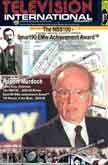 •
•