|

Feature
Story - Prime Minister of Italy - 2009
-----Mr.
Berlusconi from TVI's Person of Week in
1989, to Italy's Prime Minister of Italy
and friend of American
- in
1989, during the MIPCOM television
conference in Canes, France, Silvio
Berlusconi was and still is one of is
Italy's richest men, whose reach is hard
to escape, especially now that he's
Italy's Prime Minister. During
TVI's featured interview by Frank IIezzi,
Berlusconi, RAI-TV, he described himself,
a future political leader to watch out
for. "He was right on", says TVI publisher
Josie Cory. "During the '89 MIPCOM Cannes
meeting, you could see his future in the
way he spoke to the press. He was getting
ready for his 2000 A.D. international
world events
fame."
(Continue)
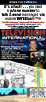
Above photos
show, the timeline of Silvio
Berlusconi since 1989. Bottom left shows
Silvio with, Pres. Geo. W. Bush, Silvio
shaking hands with TVI publisher, Josie
Cory, after 1989 MIPCOM press Q&A
conference, Josie Cory with John
Billingham of BBC and Joe Bamberger of
UFA, Germany, in Cannes.
See
TELEVISION INTERNATIONAL MAGAZINE -
1989
MORE
/ RELATED NEWS
Mr.
Berlusconi from TVI's Person of the Week
in 1989, to Italy's Prime Minister of
Italy and friend of America -
-----
in 1989, during
the MIPCOM television conference in
Cannes, France, Silvio Berlusconi was
and still is one of is Italy's richest
men, whose reach is hard to escape,
especially now that he's Italy's Prime
Minister. During
TVI's feature interview by Frank IIezzi,
Berlusconi, RAI-TV, he described himself,
a future political leader to watch out
for. "He was right on", says TVI publisher
Josie Cory. "During the '89 MIPCOM Cannes
meeting, you could see his future in the
way he spoke to the press. He was getting
ready for his 2000 A.D. international
world events
fame."
•
As an example:
President George W. Bush participates
in a plenary meeting with leaders during
the G8 Summit on Sea Island, Ga.,
Wednesday, June 9, 2004. Clockwise,
Russian President Vladimir Putin, German
Chancellor Gerhard Schroeder, Italian
Prime Minister Silvio Berlusconi, European
Council President Bertie Ahern, European
Commission President Romano Prodi,
Canadian Prime Minister Paul Maritn,
Japanese Prime Minister Junichiro Koizumi,
British Prime Minister Tony Blair and
French President Jacques Chirac.
-----
Not Bad Company is
it? An Italian can spend a Saturday
shopping at his local supermarket,
relaxing in his home, reading a paper,
before flicking through a few TV channels
to watch AC Milan play football, and all
these services may have been provided by
his prime minister.
-----The
PM is not only the head honcho of a vast
business empire spanning newspapers, TV
and radio, but motion pictures, football,
advertising, insurance, food and
construction companies as well.
-----For
some Italians, Mr. Berlusconi's success as
a business tycoon is evidence of his
capabilities - a reason why he should run
the country. But his business involvements
have caused a series of legal problems
which have tarnished his image.
He faces charges of
bribing judges, in a trial in
Milan.
This was halted in
June by the introduction of controversial
immunity laws, but is now expected to
resume after Italy's top court annulled
the law.
•
The power of
personality
-
Italian
writers call him IL
Cavaliere
-----Italy's
richest man, the business tycoon Silvio
Berlusconi, is on his way back to
power.
His
centre-right coalition was driven by
Berlusconi's forceful personality and his
catch-all campaign, promising tax cuts,
better pensions, safer cities and jobs for
all.
----Mr.
Berlusconi's empire includes three
television channels, Italy's biggest
publishing house, an advertising agency, a
major newspaper, and a leading football
team, AC
Milan.
Critics
accuse him of having too much control of
the media, and fear he will exploit his
power.
-----The
64-year-old politician's business
interests have come under attack in
several lengthy court trials for alleged
bribery, corruption and tax evasion, but
none of the charges have stuck. Neither
have accusations of Mafia
connections.
Italian
public opinion did not seem
worried.
•
Man
of charisma - critics accuse him of having
too much
power
-----Mr.
Berlusconi sells himself as a strong
leader and statesman. His party, founded
in 1993, is called Forza Italia.
Airbrushed campaign posters make him
appear 10 years younger. Many Italians
believe the
hype.
----Dr.
James Milton, a political scientist at the
American University of Rome, said Mr.
Berlusconi's popularity stemmed from his
ability to inspire many
Italians.
-----"The
Italians seem to want to trust Mr.
Berlusconi because he sells himself as a
man who has made millions out of nothing -
a man who is a huge success in his own way
and who will make Italy a huge success,"
says Milton.
•
Show
biz image
-----In
1994 Mr. Berlusconi was forced to step
down as prime minister after just seven
months in a turbulent coalition which
included many of the same men he was
running with this time
around.
-----But
despite that, many voters see him as a
fresh start. He certainly has an
unshakable self-confidence and a legendary
gift of the
gab..
In a
recent interview Mr. Berlusconi said he
was driven by the knowledge that only he
could turn this country
around.
-----The
alternative, he said, was career
politicians who were not up to the
job.
Mr.
Berlusconi is a true showman, with a
permanent tan and beaming smile. He has
yachts, villas, a glamorous second wife
and three young children. His son and
daughter from his first marriage, which
ended in divorce, help run his companies.
The Italians even have a word to describe
his flamboyant lifestyle:
Berlusconismo.
•
Berlusconi has the gift of the gab that
appeals to
Italians
-----
On the eve of a major campaign rally by
the left-wing parties, Mr. Berlusconi told
journalists the left had mounted a hate
campaign, and that he had canceled his
major rallies because of death
threats.
-----The
announcement grabbed headlines and stole
the left's
thunder.
-----Antonio
Martino, a member of Mr. Berlusconi's
party, dismissed fears that a victorious
Mr. Berlusconi would exploit his business
empire.
"I
think if you want to use your power for
personal gain you don't put yourself
centre stage," he
said.
"Because
[then] you are under the control
of democracy - there is a system of
control in place."
 02.
TIMELINE
- 02.
TIMELINE
-
•
1936
- Silvio Berlusconi was born in 1936,
apparently
in comfortable circumstances. Friends and
foes have been quick to mythologise his
career - he supposedly charged entrance
fees for puppet shows at primary school,
was a ghostwriter for high school essays
and of course sold vacuum cleaners to pay
for his law degree at the University of
Milan. His thesis was on The Newspaper
Advertising Contract. 1960 Corte
Costituzionale ruled that state
broadcaster RAI monopoly is
unconstitutional.
Photo Left
shows, the timeline of
Silvio Berlusconi since 1989. Bottom left
shows Silvio with, Pres. Geo. W. Bush,
Silvio shaking hands with TVI publisher,
Josie Cory, after 1989 MIPCOM press
Q&A conference, Josie Cory with John
Billingham of BBC and Joe Bamberger of
UFA, Germany, in
Cannes.
----Highlights
in his early years:
Silvio started
honing his business skills at a young
age. He used his
charm to sell everything from vacuum
cleaners to university essays during his
youth, activities complemented by stints
as a nightclub singer, but this was just
the warm-up.
----His
business mind came into play at a young
age - as a student he supplemented his
income by charging fellow students for
writing their exam papers. Later he worked
as a singer with his own band on summer
cruise ships.
•
1960's
-
1962
Berlusconi establishes real estate
development company Cantieri Riuniti
Milanesi
1963 establishes Edilnord property and
construction group
1969 builds Milano 2 residential
development, later builds Milano 3 and Il
Girasole
developments
----Highlights
in the 60s: In
1961, he graduated in law and started his
business career in earnest, borrowing from
the bank where his father worked to set up
his first company, Edilnord. Edilnord, a
construction company, Mr. Berlusconi
established himself as a residential
housing developer around his native
Milan. Milano 2,
comprising nearly 4,000 tasteful flats in
a garden setting, was built on the city's
eastern outskirts until the late
1960s.
1969 builds Milano 2 residential
development, later builds Milano 3 and Il
Girasole developments
----In
1962 he founded a construction company,
Elinord, and rode the Milan property boom.
He took advantage of government
deregulation of the television industry in
the mid - 1970s to buy Telemilano cable
shopping channel, and by 1986 had captured
80% of Italy's commercial TV
market.
----His
school days were really an on the job,
work in process era. He always
moved
in the right circles at university (future
prime minister Bettino Craxi was a friend)
and made a small fortune from 1962 onwards
using a property and construction company
named Edilnord, notably through
residential development such as Milano 2
in 1969. That generated allegations that
he'd benefited from favorable rulings by
local politicians and had ties to the
shadowy Propaganda 2 (P2)
group.
•
1970's
-
1974
the cable television station formed
Telemilano to service Milano 2
1975 establishes Fininvest holding
group
1976 Corte Costituzionale ruling allows
local radio and television
1978 formed: 'virtual' national television
network - local stations simultaneously
broadcast the same programs
1969 builds Milano 2 residential
development, later builds Milano 3 and Il
Girasole
developments
----Highlights
in the 70s:
1974
he founded cable television station
Telemilano to service Milano 2 and in
1978 worked his way around rules that gave
RAI the national broadcast monopoly: his
local stations simultaneously broadcast
the same programs. Fininvest was founded
in 1975 as a holding company. He
established Canale 5 (Channel 5) in 1980,
a big hit with a schedule of local game
shows and US treats such as Dallas
---- After
launching - Telemilano - the
Berlusconi family firm gained control over
three commercial TV channels. As the media
empire - which now also includes Italy's
largest publishing house Mondadori and the
leading daily newspaper Il Giornale - was
being built, Mr. Berlusconi's company
Fininvest had taken nearly 150 other
companies under its umbrella. But despite
having friends in the government, Mr.
Berlusconi had not himself made any moves
to enter the political
fray.
•
1980's
-
1980
launches Canale 5 television network
1983 buys Italia Uno television
network
1984 buys Retequattro television
network
1984 prime minister Craxi's 'Berlusconi
Decree' overturns court order banning
Berlusconi from broadcasting
1985 buys stake in Mondadori publishing
group
1985 buys cinema chain
1985 launches La Cinq tv network in France
in partnership with Jerome Seydoux
1986 Seydoux leaves La Cinq following
elections, replaced by Robert Hersant
1986 becomes chair of AC Milan soccer
club, with most equity in club
1987 involved in Telefunf network in
Germany
1988 buys La Standa department store
group
1989 takes stake in Telecinco network in
Spain with Kirch
----Highlights
in the 80s:
At
the same time he established the
Publitalia 80 advertising agency, one
of the largest in Europe by the
mid-1980's, and acquired the other two
major commercial television stations -
Retequattro (1984) and Italia Uno
(1983).
---- Fininvest
moved into newspaper and magazine
publishing (e.g. the weekly
Panorama), books (the venerable
Mondadori group in 1985), retailing,
direct marketing, online services, cinemas
(1985) and sport (the AC Milan soccer
team).
---- That
expansion reflected past moves by other
families (for example the Agnellis) but
was more rapid and generated a new epithet
- 'Berlusconism' - to describe a way of
life in which people lived in houses built
by Berlusconi, watched television
controlled by Berlusconi, shopped at
supermarkets owned by Berlusconi, ate in
restaurants built by Berlusconi, and
relaxed on Berlusconi tennis courts or
watching his soccer team. Investment
outside Italy - e.g. in Spain, in France
(with Seydoux and Hersant) and Germany
(with Kirch) - was less successful. 1969
builds Milano 2 residential development,
later builds Milano 3 and Il Girasole
developments
-----The
scandal of 1981, was when Mr. Berlusconi
was revealed as a member of the P-2
Freemason's lodge, a secret network of
politicians, businessmen and media
figures. The group was disbanded, and Mr.
Berlusconi emerged
unscathed.
---- In
1984 prime minister Craxi's 'Berlusconi
Decree' overturned a court order
banning Berlusconi from broadcasting. That
support was reflected in the 1990 Legge
Mammi that implicitly created a
Berlusconi/RAI duopoly. 1980's, Apparently
under whelmed by Australian-style attempts
to limit ownership to either broadcast or
print, Berlusconi appointed his brother as
editor of Il Giornale and shrugged
off litigation during the Tagentopoli
("Bribesville") investigations of
1992-94.
•
1990's
-
1990
Legge Mammi creates Berlusconi/RAI
duopoly
1990 Hersant and Berlusconi withdraw from
La Cinq
1990 bitter fight with de Benedetti for
control of Mondadori and la Republica
1992-94 shrugs off bribery, tax fraud and
creative accounting litigation during the
Tagentopoli ("Bribesville")
investigations
----Forza
Italia
1993 fformed: populist
Forza
Italia
party
1994 Forza Italia becomes largest bloc in
national parliament
1994 Berlusconi becomes PM, with Forza
Italia in coalition with neo-fascist
Alleanza Nazionale and Northern League,
but resigns at end of year
1995 sells 20% stake in Mediaset to Kirch
and others for US$1.1 billion
reduces Mediaset stake to under 50%
through a public flotation
1998 sells La Standa's discount store arm
(167 locations)
1999 Epsilon MediaGroup established as 50%
partnership with Kirch
----Highlights
in the 90s: In
1993 Berlusconi formed the populist Forza
Italia
party
on
the theme of "good government" and the
"politics of efficiency". Forza Italia
became the largest bloc in the national
parliament at the March 94 elections, with
Berlusconi as PM in coalition with the
neo-fascist Alleanza Nazionale (AN) and
the Northern League. Insights are offered
by Jonathan Hopkin's 2004 New Parties
in Government in Italy: Comparing Lega
Nord and Forza Italia (PDF).
Berlusconi resigned in December
1994.
----In
July 1995 he sold a 20% stake in Mediaset
to German Kirch Media and others for
US$1.1 billion, subsequently taking his
stake to under 50% through a public
flotation.
----He
again became PM in the 2001 election
(Alexander Stille's NYRB
comment is here)
and has since extended his broadcast
holdings.
---He
now controls three national TV channels:
Canale 5, Italia 1 and Rete 4. He bought
AC Milan in 1986, and won control of the
Mondadori publishing house in 1990. His
declared annual income is $7.7million, and
he has an estimated $11billion
fortune.
•
2000's
-
2001
becomes PM again
2001 Mediaset buys Radio Italia (national
commercial radio network), advertising
agency Editoriale Sper, syndication
company CNR and news agency AGR
2001 sells 9% stake in mobile phone
operator Blu
----Highlights
in the 2004s:
Prior
to 2004, which saw publication of Paul
Ginsborg's
perceptive Silvio Berlusconi:
Television, Power & Patrimony
(London: Verso 2004) and David Lane's
Berlusconi's Shadow: Crime, Justice
and the Pursuit of Power (London:
Allen Lane 2004), there was no major
English-language study of Berlusconi or
Fininvest.
----Marco
Travaglio's L'odore dei soldi
(Rome: Editori Riuniti 2001), reviewed
here,
endorses the Economist's claim that
the empire's smell is not very sweet.
Other Italian treatments include Paolo
Labini's Berlusconi e gli anticorpi:
Diario di un cittadino indignato
(Bari: Laterza 2003), Giorio Bocca's
Piccolo Cesare (Milan:
Feltrinelli 2002), Giuseppe Fiori's Il
venditore: Storia di Silvio Berlusconi e
della fininvest (Milan: Garzanti
1996), Franco Cordero's Le strane
regole del Signor B (Milan: Garzanti
2003) and Giovani Sartori's Mala
tempora (Bari: Laterza
2004).
----Giovanni
Bechelloni's 'The Journalist as Political
Client in Italy' in Newspapers
& Democracy (Cambridge: MIT Press
1980) edited by Anthony Smith and
Political Clientalism & the Media:
Southern Europe & Latin America in
Comparative Perspective
(PDF)
by Daniel Hallin & Stylianos
Papathanassopoulos offer a perspective.
That is consistent with Gianpietro's
'Media Moguls in Italy' in Media
Moguls (London: Routledge 1991) edited
by Jeremy Tunstall and Ginsborg's Italy
and Its Discontents: Family, Civil
Society, State 1980-2000 (London:
Allen Lane
2001).
----On
19 January 2002 the Economist
commented that
Mr.
Berlusconi has yet to remove the
ubiquitous conflicts between his private
and public concerns. Because his companies
are embroiled in almost every part of the
economy, his failure to do so casts doubts
on the motives behind so many of his
projects, whatever their
merits.
----Proceedings
relating to alleged tax fraud,
accounting peculiarities and bribery
of police and judges continued. In April
2001 the Economist alleged that
he'd paid 23 billion lire into Craxi's
offshore bank
accounts.
----As
of 31 July 2003 the Economist -
claiming that he had "tried to put
himself beyond the reach of the law" - was
pressing Berlusconi for answers; the media
czar (and then president of the European
Union's Council of Ministers) was
continuing defamation action against the
UK publication over the 2001 article.
Readers of this site should conduct
appropriate research before making their
own judgments about circumstances, claims
and counterclaims.
----Last
year he acknowledged for the first time
that he had suffered prostate cancer, but
despite rumors to the contrary he insists
he has been cured. He certainly appears to
have unstoppable energy.
Companies
controlled by the family of
Italian Prime Minister Silvio Berlusconi
dominate
----Italian
commercial television (with a 45% audience
share and over 60% of total advertising
sales), have a major presence in
advertising and publishing, and have been
moving into telecommunications, despite
recurrent allegations of of impropriety.
Ownership of Italy's mass media is even
more concentrated than that of Canada and
Australia.
----The
family has beneficial ownership of around
96% of the Fininvest holding company.
Fininvest has a 48.6% controlling stake
(worth around US$6.0 billion) in
Mediaset,
the terrestrial television group that
competes with state-owned RAI and operates
three networks: Canale 5, Italia 1 and
Retequattro.
Dominance of the airwaves is of particular
interest given low newspaper readership
figures: Pippa Norris' insightful A
Virtuous Circle: Political Communications
in Post-Industrial Democracies
(Cambridge: Cambridge Uni Press 2000)
for example notes suggestions that 82% of
Italians depend only on television for
news, the highest percentage in the
EU.
----Fininvest
also has a controlling stake in Mondadori,
Italy's largest book and magazine
publishing group (with 30% and 38% of the
domestic market respectively). Mondadori's
magazine arm encompasses over 50
titles.
----Fininvest
controls Il Giornale, a leading
national newspaper that competes with
L'Espresso's
La Republica and with La
Stampa and Corriere della Sera
of the RCS group. It has a 36% stake in
financial-services group Mediolanum. Other
holdings include property, multimedia,
printing and telephone
directories.
----Cross-holdings,
nominee companies and other devices
inhibit a clear picture of the group.
There have been recurrent moves to force
Berlusconi to divest some of his media
assets - and he has made undertakings to
that effect - but there is apparently
little action. Indeed, at the end of 2001
he moved
to acquire additional print and radio
operations from the Il Sole 24 Ore
group.
- Center
Page /
List
of Berlusconi
holdings
•
Music
Mediaset
group (48.6%)
Canale 5
Italia 1
Retequattro
several pay-TV channels;
Telecinco - Spanish commercial
broadcaster (40%)
13% of Breton cable tv group TV Breizh
(Murdoch's News International has 13%)
- Berlusconi
formerly had a 2.28% stake in Kirch
Media, the German broadcaster and
production
group
•
Film
production and
distribution
- Medusa
Films - largest Italian production
house
Penta - distributor (50%)
Cinema 5 - cinema
operator
•
Music
- Mediaset
has recording and rights management
units
•
Publishing
- Mondadori
(50.3%)
Einaudi
Sperling & Kupfer
Frasinelli
Athena
Poseidonia
Electa Napoli
Grijalbo - distribution units in
Colombia, Argentina, Spain, Chile,
Uruguay, Venezuela,
Gruner & Jahr Italy - partnership
(50%) with Bertelsmann
subsidiary
Hearst Mondadori - 50% magazine
publishing partnership with
Hearst
Il Giornale
Il Foglio
Pagine Utili - phone directories
approximately 50
magazines
----Multimedia
- Jumpy
- InterNet portal
Newmedia
----Advertising
- Publitalia
80
----Property
development and
construction
- Edilnord
Cantieri Riuniti
Milanesi
----Finance
- Mediolanum
- general insurance
Mediolanum Vita = life assurance
----
Sport
- AC
Milan - football club
Hockey and Volleyball
clubs
----Retail
Blockbuster
Italia - video rental (51%)
La Standa department store group
Supermercato supermarket
chain
----Printing
printing
operations in Germany and
Spain
----Other
direct
2.48% stake in Kirch TVI Magazine
is not responsible for the content of
external InterNet sites
Return
ˆ
To
Top
ByLines:
Editors
Note
•
Italians,
like most Americans, are attracted to
personal success
stories. It was
in 1971, when TVI first wrote about
Silvio. He had just launched a local
cable-television - Telemilano. "We saw the
project grow and grow", wrote TVI's
co-founder, Al Preiss, 'until the
Berlusconi family firm controlled three
commercial TV channels".
-----
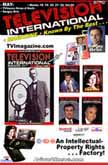
Our
first TVI Magazine Tips "browser" issue
- 1989, seen in above photo, depicts
Silvio with a globe, predicting the future
of the world of
comunications.
Troy says he was drawn into the featured
1989 Berlusconi article, written
by Dr. Iezzi, Ph.D, of Hofstra University,
because of the globe photo. It brought
back the wireless networking predictions
of "Marconi" and N.B. Stubblefield of the
early
1900s.
-----
As the media empire
was being built, Silvio founded his own
political party in 1993, Forza Italia - Go
Italy, named after a chant used by fans of
the AC Milan football club - which he also
owns. He saw his chance as judges in Milan
purged the country's old political class
in "Operation Clean Hands", aimed at
eliminating the corruption which had
tainted public
life.
-----It was in
1994, when Silvio first became the Prime
Minister of Italy. By summertime in July
1994, TVI
Magazine was helping him celebrate his
position and cheer on the Italian soccer
ball team while attending the Soccer World
Cup at the Pasadena Rose Bowl, California.
----- During
the excitement, Josie invited the Prime
Minister and his group to have a few
drinks after the game at our Rosemont
Estate, just down the street from the Rose
Bowl. More would have attended, but I
think a personal call from Italy; and
Brazil's victory over Italy put a damper
on the festivities. It just wasn't the
year for Silvio
Berlusconi.
-----A few months
later he was out.
"It
took nearly seven years", writes Troy and
Josie Cory, in their book,
"Disappointments
Are Great, Follow the
Money" - but by
2001, he was back on top, in coalition
once more with his former partners. But
accusations have continued to dog him,
ever since, except for one thing.
He
fooled them all by teaming
with President Bush, after 911.
----
"In
essence", said Troy, during the interview
for this article, "the movie segments we
shot in Venice, and at Berchtesgaden,
Germany, "Lost
Woman of Italy", has really paid off
for those politicians who have seen this
classic movie segment. The story is about
the good and bad choices of men and women,
during times of war, and those people that
are subject to
coalition
governments."
-----Since,
overcoming the corruption, he's overcome
the claims that he tried to bribe judges
to stop a business rival taking over
state-owned food group SME in the 1980s.
He describes the charge as "fantasy" and
says he is the victim of a political
campaign by left-wing judges.
-----The
PM has also been embarrassed by the
conviction in April of his former personal
lawyer, Cesare Previti, for bribing a
judge during a takeover battle to favor
his Fininvest company. Over the past two
years, many Italians have tolerated, and
even admired, some of the more tycoon-like
aspects of their leader.
-----But
as many as two-thirds of the electorate
were against the immunity law, under which
Mr. Berlusconi was exempted from trial
while he remained in office.
-----And
now that the Constitutional Court has
thrown it out, Premier Berlusconi, like
our own President Bush, will continue to
battle with those opposing the war in Iraq
during his second term, while the Premier
will battle the judges, set to continue to
override him with another coalition
government, for the up-tenth time.
-----It
just goes to show you, says Troy,
"NOTHING IN THIS WORLD IS
PERMANENT" . . . so follow the
money
- - and
take some advice from a dinner-time chat
with "Stonehead".f
More
Articles • Converging
News2007 / TeleCom BuyOuts, Spinoffs and
Asset Seizure Boom
Respectfully
Submitted
Josie
Cory
Publisher/Editor
TVI
Magazine
•
• TVI
Magazine, tviNews.net, YES90, Your Easy
Search, Associated Press, Reuters, BBC, LA
Times, NY Times, VRA's D-Diaries, Industry
Press Releases, They Said It, SmartSearch,
and Wikipedia, the free encyclopedia were
used in compiling and ascertaining this
Yes90 news
report.
•
• ©1956-2007.
Copyright. All rights reserved by:
TVI Publications, VRA TelePlay Pictures,
xingtv and Big Six Media Entertainments.
Tel - 323 462.1099.
We
Preserve The Moment
Return
ˆ
To
Top
|